Granite care
Granite is hard and acid-resistant, so it rarely etches, but it does lose its shine to years of cleaners and wax, gets hazy around the sink, stains with oil, and chips at edges. All of it is fixable in place.
What granite actually needs
Most "dull" granite is not worn, it is coated: layers of topical polish, soap film and hard water. We strip that back to bare stone first. True wear and scratches are re-polished with diamond abrasives and a granite-specific compound. Oil and rust stains are drawn out with a poultice. Chips are filled with color-matched epoxy.
Sealing granite
Some granites are dense enough that they barely absorb; others, especially lighter ones, drink in oil. We water-test the stone and only seal what needs it, with a penetrating sealer that slows stains without changing the look. Sealing has nothing to do with shine; shine comes from polishing.
Granite floors and exteriors
Lobby floors, entries and building facades in granite take traffic wear and salt. We hone and re-polish floors to an even finish and clean and seal exterior cladding.
FAQ
Granite questions
Does my granite need sealing every year?
Only if it absorbs water. Drop a little water on it: if it darkens within a few minutes, seal it. If it beads for a long time, it does not need it yet.
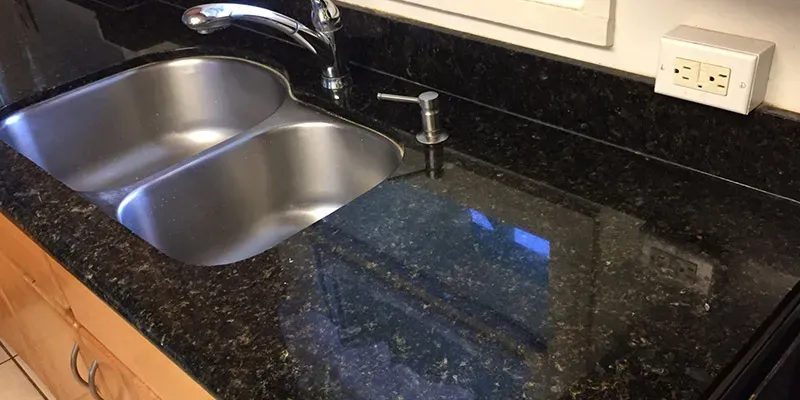
Why is my granite dull around the sink?
Usually hard-water and soap film, sometimes micro-scratching from scrub pads. We remove the film and re-polish the area to match the rest of the counter.
Can granite etch?
Rarely. Some granites with calcite veins can mark from strong acid, but for most granite the problem is coating or wear, not etching.