Limestone restoration
Limestone is soft, porous and acid-sensitive, which makes it the stone most likely to look tired after a few Oʻahu years. It responds beautifully to honing, and because it is usually finished matte, restoration is forgiving and fast.
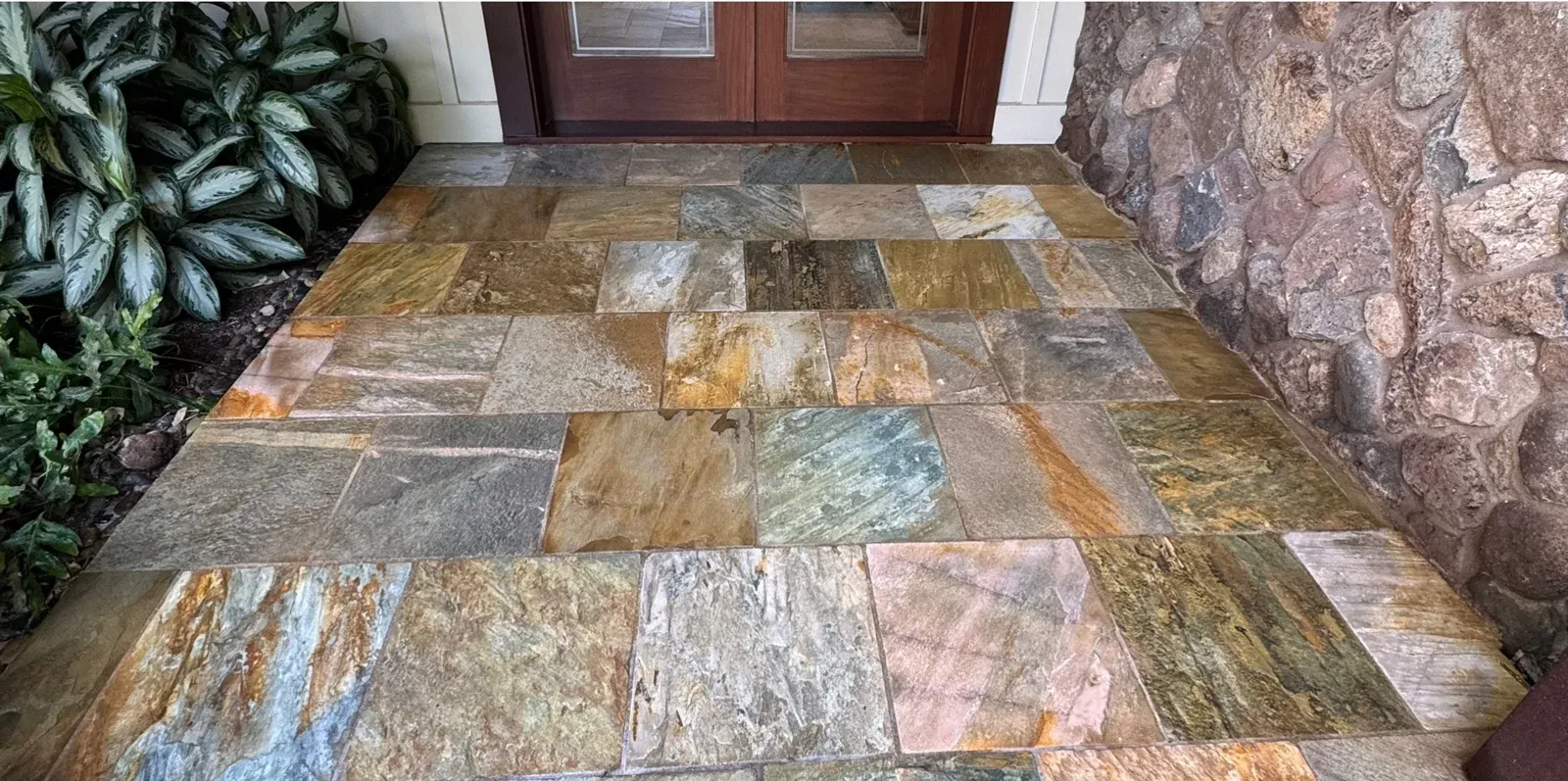
Typical limestone issues
Gray, ground-in soil in the pores; etching from cleaners; water staining on lanais; rust from furniture; scratches from grit. Honed limestone hides etches better than marble but shows dirt more, so most jobs start with a serious deep clean.
Our approach
Deep clean and extract, fill any voids, hone to a uniform finish (and polish only if the stone was originally polished), then seal with a penetrating impregnator. Outdoors we use a breathable sealer and advise on drainage and furniture pads.
FAQ
Limestone questions
Can limestone be polished to a shine?
Some dense limestones take a soft polish; most are meant to be honed. We tell you honestly what your stone will do after a test spot.
Will sealing protect limestone from etching?
No. Sealer slows staining only. Etching from acid is corrected by honing. Use a pH-neutral cleaner and keep citrus and vinegar off it.