Honing
Honing re-cuts the stone surface with progressively finer diamond abrasives until etches, scratches and wear are gone, then stops at a smooth, low-sheen finish. It is the workhorse of stone restoration.
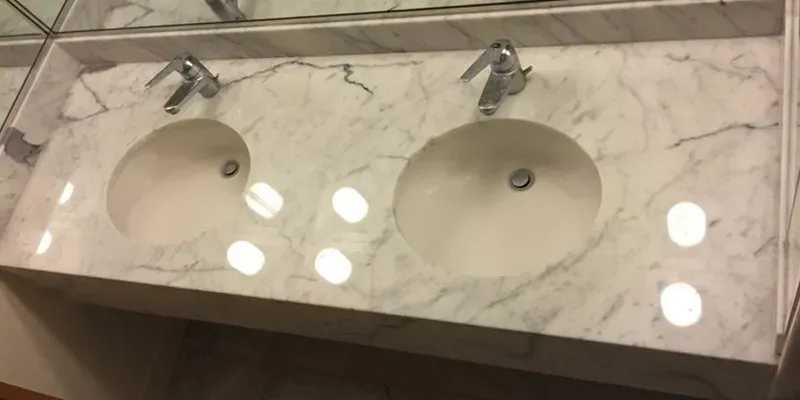
When honing is the answer
Dull traffic lanes, etch marks, scratches, uneven lippage between tiles, a polished finish you no longer want, or a floor that was never finished properly. Honed stone is also what most restoration ends with on Oʻahu floors because it hides daily wear.
The process
Wet diamond pads under a weighted planetary machine on floors, hand machines on counters and walls. Slurry is extracted as we go. We hone through 3 to 5 grit steps depending on damage, stopping at the sheen you choose: matte, satin or a soft hone just short of polish.
FAQ
Honing questions
Does honing change the color of the stone?
Honed stone reads slightly lighter and softer than polished. Sealing or a color-enhancing sealer can deepen the tone if you want it richer.
Will a honed counter still etch?
Acid still reacts with calcium, but on a honed surface a fresh etch is far less visible and can often be blended by hand without a full redo.