
Marble restoration
Marble is calcium carbonate: soft, beautiful, and reactive to acid. Etches, dull traffic paths and scratches are not stains; they are damage to the surface itself, and the fix is to re-cut the surface with diamond abrasives, then hone or polish it back to one even finish.
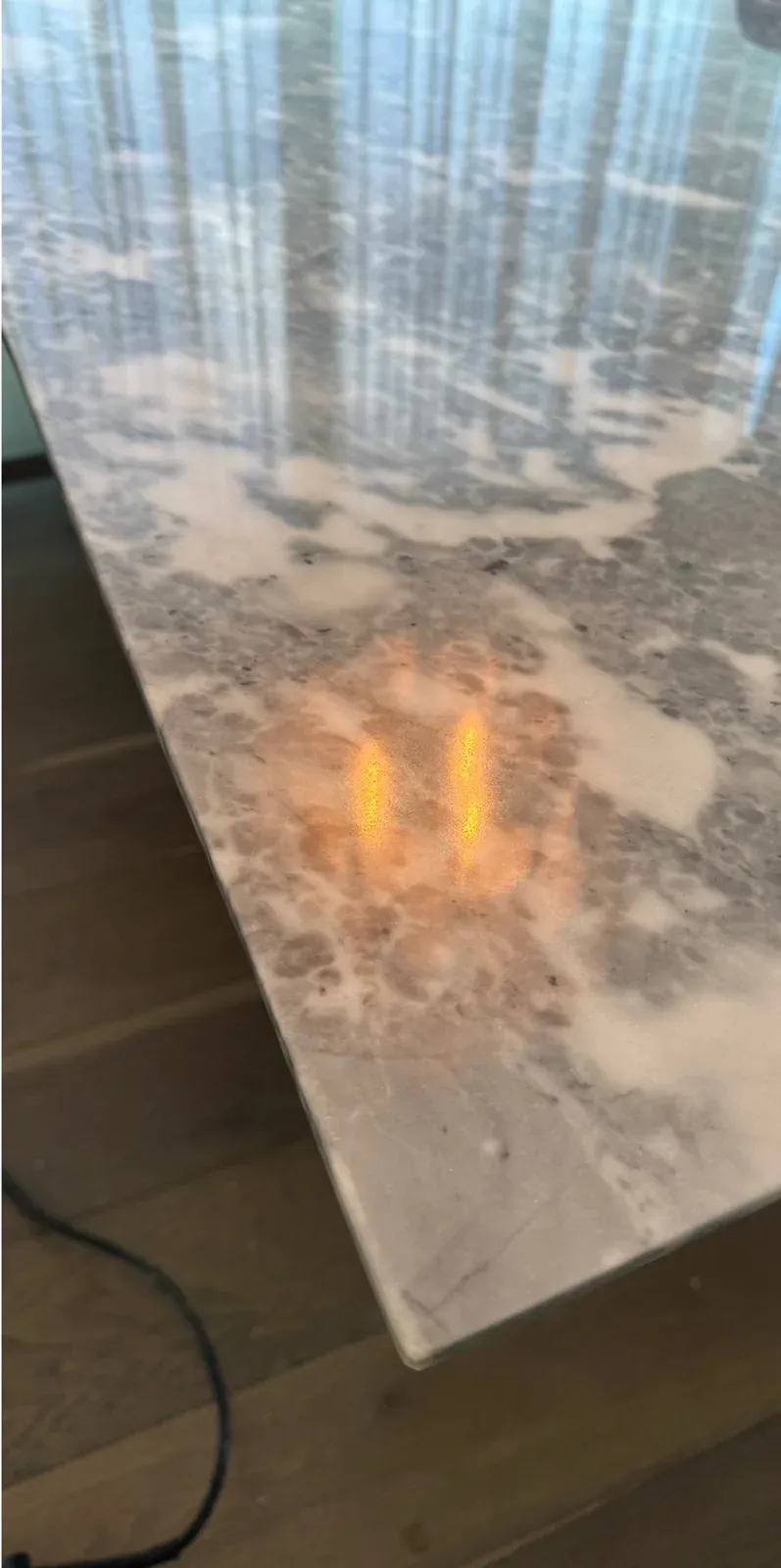
What goes wrong with marble on Oʻahu
Humidity and sand carry grit indoors and wear traffic lanes into floors. Lemon, vinegar, wine and most bathroom sprays etch counters and shower walls, leaving dull rings and drips. Years of acrylic "polish" products build a yellowing film. Rust spots appear under metal cans and planters. All of it is correctable.
How we restore it
Floors: lippage ground flat if tiles sit unevenly, then honed through progressive diamond grits, then either left at a satin hone or polished to a mirror with a final compound. Counters and vanities: hand-honed and polished in place, edges included. Showers: soap scum and hard water stripped, etching honed out, grout cleaned, then sealed. Every job ends with a penetrating sealer to slow staining, and a care sheet so the finish lasts.
Honed or polished?
Polished marble is dramatic and shows every etch. Honed marble is quieter, hides wear and etches far better, and is the right call for most kitchens and busy floors. We will show you both on a test area before deciding.
FAQ
Marble questions
Will sealing my marble stop etch marks?
No. Sealer slows stains by filling pores; acid still reacts with the calcium at the surface. Etches are removed by honing or polishing, and the habits that cause them (coasters, pH-neutral cleaner) prevent the next ones.
Can a polished marble counter be made matte instead?
Yes. Honing a polished counter to a satin finish is common on Oʻahu and makes it far more forgiving day to day.
How long does marble floor restoration take?
About 150 to 300 square feet per day depending on the condition and the finish. A typical condo living area is one to two days.