
Sealing
A sealer is an impregnator that fills the pores of the stone so liquids soak in slowly, giving you time to wipe a spill before it becomes a stain. That is all it does, and that is plenty. It does not stop etching, it does not add shine, and it does not make stone maintenance-free.
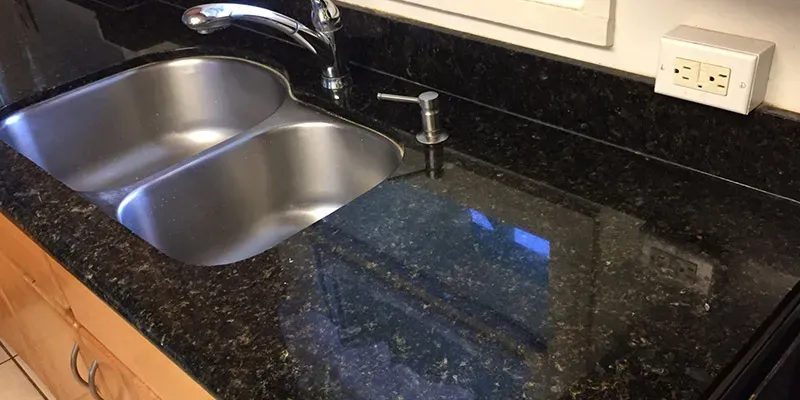
What sealing protects against
Staining: oil, wine, coffee, red dirt, rust from a planter, water marks on porous stone. On travertine, limestone and light granite this is a real benefit. On dense dark granite it may not be needed at all, which is why we water-test first.
What sealing does not protect against
Etching. Acid reacts with the calcium carbonate at the surface of marble, travertine and limestone, sealed or not. The dull spot that appears is corrected by honing or polishing, never by sealing. Sealer also does not prevent scratches or wear. Anyone promising etch-proof or scratch-proof stone from a sealer is wrong.
How we seal
After cleaning or restoration, when the stone is dry, we apply a solvent- or water-based penetrating sealer in thin coats, dwell, and buff off every trace so nothing sits on top. Outdoor stone gets a breathable product. Color-enhancing sealers are available if you want a deeper, "wet" tone on honed or tumbled stone.
FAQ
Sealing questions
Does sealer prevent etching?
No. Etching is a chemical reaction between acid and the stone surface; sealer sits in the pores below it. Etches are fixed by honing or polishing.
How often should stone be re-sealed?
Porous stone in a kitchen: every one to three years. Dense granite: sometimes never. Test with water; if it darkens quickly, it is time.
Will sealing make my floor shiny?
No. Shine comes from polishing the stone. A penetrating sealer leaves the finish exactly as it was.